Manual System

Child & Pet Friendly:Cordless design helps create a safer home.

Easy Operation:Raise or lower the shade by hand with ease.

Clean Appearance:No dangling cords for a neat, streamlined look.


Bring natural warmth to your home with custom flat woven wood shades. The rear valance conceals the headrail behind the shade, creating a clean front that showcases the woven texture. Style them alone or pair them with curtains for a layered look.


Child & Pet Friendly:Cordless design helps create a safer home.

Easy Operation:Raise or lower the shade by hand with ease.

Clean Appearance:No dangling cords for a neat, streamlined look.

Control Options:Operate your shades by remote, smartphone app, or voice command. App and voice control require a compatible smart home hub.

Single or Group Control:Adjust one shade independently or multiple shades together.

Rechargeable Power:Reliable battery power with optional solar charging.
TWOPAGES woven wood shades are crafted from natural fibers such as bamboo, wood, flax, ramie, and jute.

These materials carry their own inherent variations in color, pattern, and knots—unique “beauty marks” that define the authentic character of each shade.What truly sets TWOPAGES apart is our engineered weave structure and manufacturing craftsmanship.Our weaves are specially designed to minimize bending and twisting while significantly enhancing overall stability and durability. Every detail is deliberate—so you can see the difference and feel the quality.
TWOPAGES woven wood shades are crafted from natural fibers such as bamboo, wood, flax, ramie, and jute.

These materials carry their own inherent variations in color, pattern, and knots—unique “beauty marks” that define the authentic character of each shade.What truly sets TWOPAGES apart is our engineered weave structure and manufacturing craftsmanship.Our weaves are specially designed to minimize bending and twisting while significantly enhancing overall stability and durability.Every detail is deliberate—so you can see the difference and feel the quality.
Flax, ramie, and jute are dyed and processed into yarns, cords, or paper fibers, then woven with bamboo or other natural fibers into stable plain- or grass-weave structures that reduce sagging and twisting while preserving natural texture.
Flax, ramie, and jute are dyed and processed into yarns, cords, or paper fibers, then woven with bamboo or other natural fibers into stable plain- or grass-weave structures that reduce sagging and twisting while preserving natural texture.


After being cut, shaved, flattened, and kiln-dried, bamboo strips are arranged in alternating directions and woven together with multiple yarn threads. This structure gives rigid bamboo its flexibility, allowing natural curvature while maintaining a smooth, even fall when lowered.

After being cut, shaved, flattened, and kiln-dried, bamboo strips are arranged in alternating directions and woven together with multiple yarn threads. This structure gives rigid bamboo its flexibility, allowing natural curvature while maintaining a smooth, even fall when lowered.

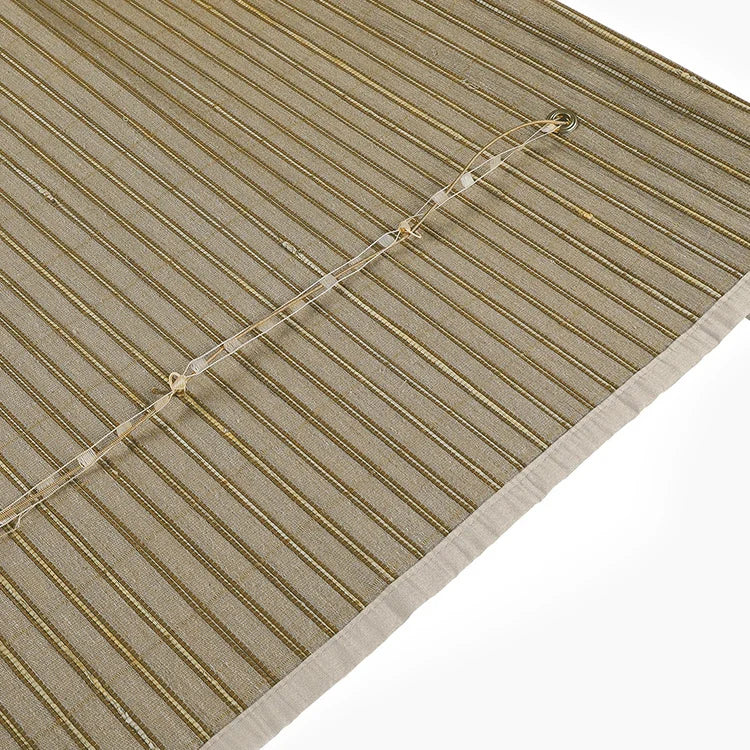
Unlined
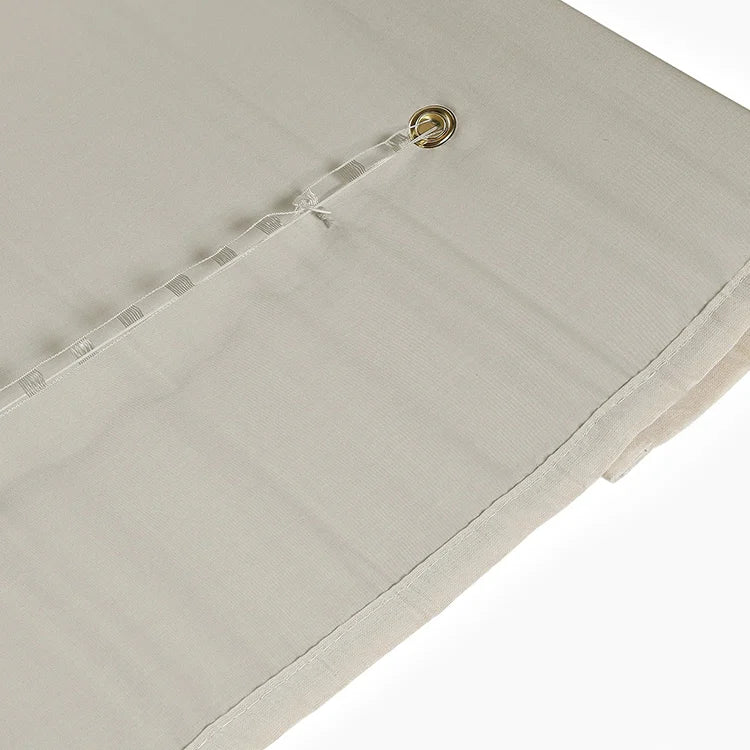
Privacy, Shading rate 50-75%
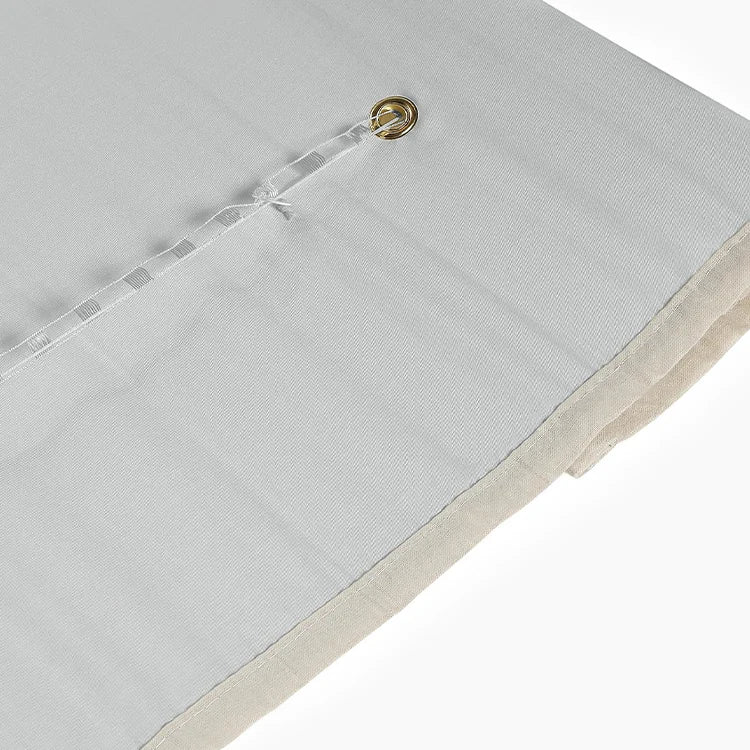
Blackout, Shading rate 96-100%
For window frame depths less than 2 “
We recommend adding a minimum of 2-4 inches to your width and 10-12 inches for height measurements to allow
for light gap coverage. View TWOPAGES Roman Shade Measuring Instruction for more details.
If you are ordering inside mount bamboo shades, yes — you need to deduct ⅜ inch by yourself. For example, if your window casing width is 50", you should order a width of 49-5/8".
If you are ordering outside mount bamboo shades, no deduction is needed.
Yes. The Measurement Finder has already helped you subtract ⅜ inch.
For window depths at least 2 3/4 inches
For Unlined and Privacy Liner bamboo shades, the valance is made with a Privacy Liner. Since light can pass through the liner, slight shadows from the internal lift hardware may be visible under natural light. This is a normal characteristic of light-filtering bamboo shades.
Yes. If you prefer a more uniform appearance for non-blackout bamboo shades, please contact support@twopagescurtains.com to customize a full blackout liner valance at no additional cost. Please note that the blackout liner valance may have a slight color difference from the bamboo shade body due to different light transmission levels.
Less is more. In the context of interior design, neutral means without color. Neutrals such as beige, ivory, taupe, black, gray, and shades of white appear to be without color. but in many applications these hues often have undertones. Be aware of these underlying tones as you match colors. Neutral colors are muted shades that appear to lack color but often have underlying hues that change with different lighting. To some extent, blacks, browns, tans, golds, and beige are considered warm. Cooler colors, on the other hand, are white, ivory, silver, and gray.


Mon. to Sat. 6am. - 5pm. PST
Sun. 6am. - 3pm. PST