
Roman Shades vs. Bamboo Shades: Which One Is Right for Your Home?
Two beautiful, wildly popular window treatments. Two distinct natures.

There is no absolute winner between Roman shades and bamboo shades, for obvious reasons: they are both incredibly beautiful in photographs, durable, and capable of completely transforming the atmosphere of a room. The key is which one better suits the needs of the space and your personal preferences. Below, we’ll take a closer look at their differences and similarities in Roman shades vs. bamboo shades.

What Are Bamboo Shades?
Bamboo shades are a type of woven wood window treatment, handwoven from natural fibers like bamboo, jute, or ramie. They roll or fold up from the bottom, and the woven texture gives each panel its own character. Not every bamboo shade uses the same materials, though: some are pure bamboo for the most natural grain, while others blend in ramie, jute, or a mix of fibers for a softer feel. See our Bamboo Shade Guide for more options and ideas.

What Are Roman Shades?
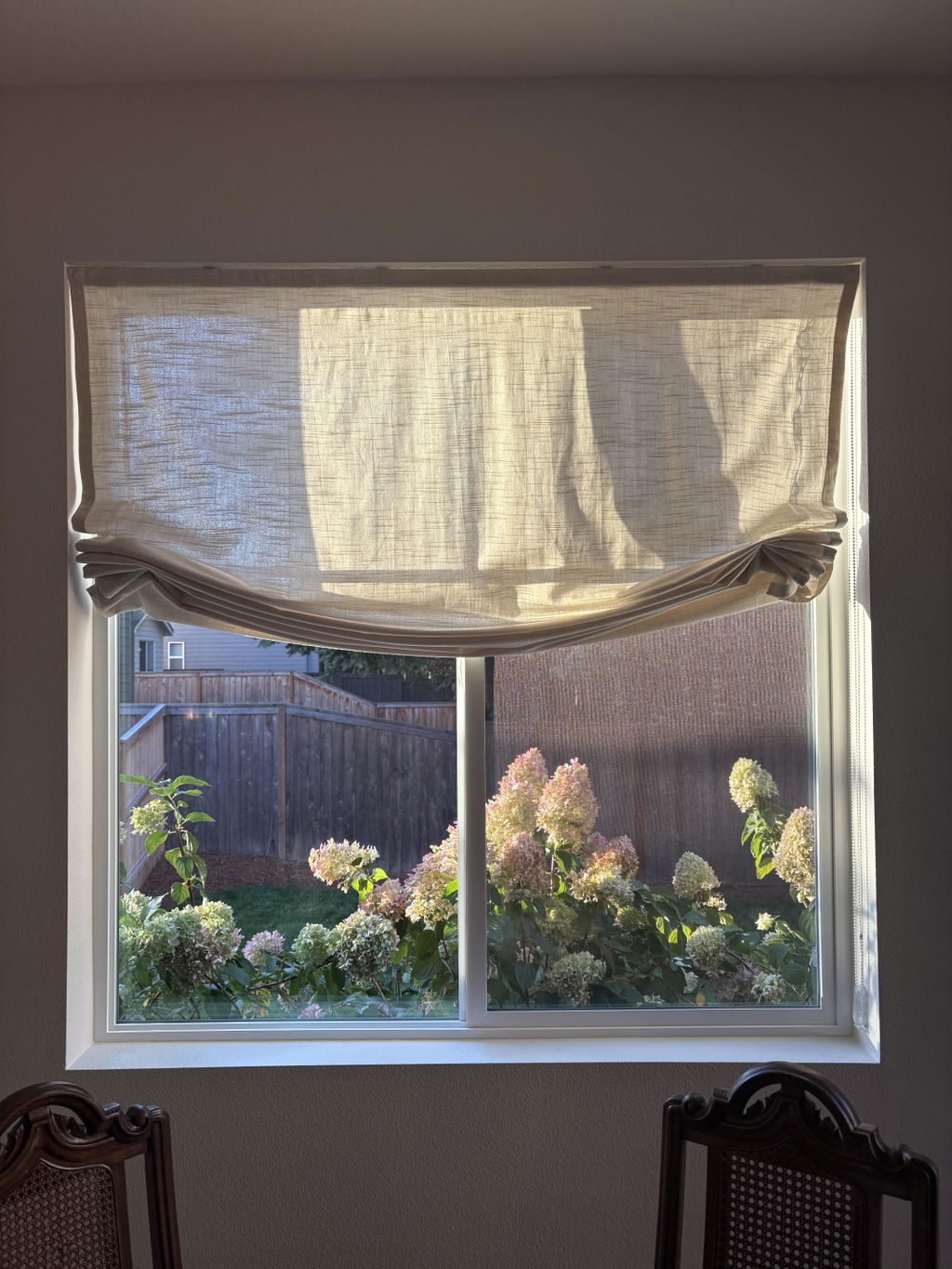
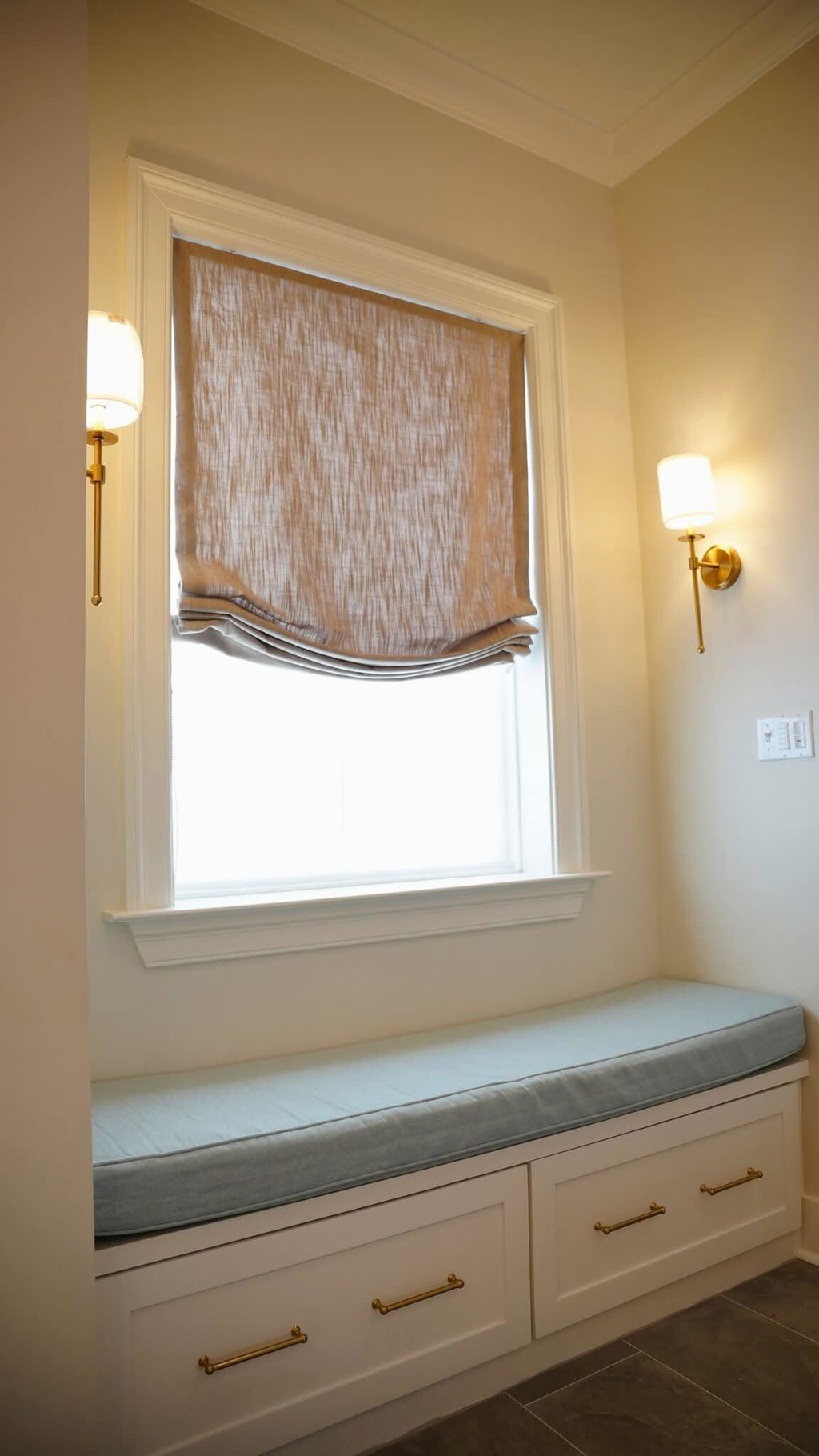
Roman shades raise and lower on a lift system built into the fabric itself. Unlike bamboo shades, they're sewn from textiles like linen, cotton, or linen-cotton blends. How they look once raised really comes down to fold style, anywhere from a flat panel with barely a visible pleat to a softly curved, relaxed hem. See our Roman Shade Style Guide to explore the different styles.

How Bamboo Shades and Roman Shades Are Made
The manufacturing process is a key difference between Roman shades vs. bamboo shades, giving each type of shade its own distinct character.
Bamboo strips are cut, shaved, flattened, and kiln-dried. Ramie, jute, and flax are prepared another way, dyed and processed into yarns or cords. A shade woven purely from bamboo only involves the first process, while a blended shade brings both prepared fibers together into a stable plain or grass-weave structure. Either way, the finished weave is what keeps the panel smooth when raised or lowered, instead of sagging or warping over time.
Roman shades are sewn, not woven. Fabric panels are cut to size, then rings, a lift tape, or thin support rods are stitched to the back, depending on the fold style. A relaxed fold typically uses simple rings so the fabric can gather into soft curves, while a flat fold or front slat style adds internal rods for crisper, more defined pleats. Either way, the quality of that stitching, along with the weight of the fabric, is what determines how sharp or soft the folds look once the shade is installed.

Bamboo Shades vs. Roman Shades
Neither material "wins" outright (both materials are genuinely excellent at what they do); here's how bamboo shades vs. Roman shades stack up on the factors that matter most.
|
Category |
Bamboo Shades |
Roman Shades |
|
Aesthetics & Style |
Organic texture with natural variation in color and knot pattern, so no two shades look alike. Fits biophilic, coastal, or farmhouse interiors. |
Flat fold reads sleek, relaxed hem feels soft, front slat adds structure. Fabric weight varies widely across the Roman collection, roughly 220 to 500 GSM: lighter fabrics suit relaxed folds, while heavier fabrics hold crisper, tailored pleats. |
|
Light Control & Privacy |
Naturally semi-sheer (60%-75% shading). A tighter, heavier woven shade weave, can naturally block some light and holds its shape better on wide windows, while a looser, lighter weave lets in more of that dappled glow everyone loves in a breakfast nook. The trade-off is privacy: unlined bamboo goes semi-transparent once the lights are on inside at night, though a liner fixes that, with Blackout offering near-total darkness. |
Roman shades don't really have that trade-off. One product line covers everything from light-filtering linen around 60 percent privacy to blackout liners rated up to 100 percent, and since you can stop the shade at any height, you get finer control over light and privacy throughout the day. Please note that due to the construction of flat-fold Roman shades, shades with a 150 GSM or higher blackout lining may show very slight light through the needle holes under strong, direct sunlight. If maximum light blockage is a priority, consider other styles, such as back-slat Roman shades. |
|
Energy efficiency |
Bamboo is breathable and naturally temperature-moderating, which is nice in summer, but it was never built for insulation. |
Roman shades close that gap two ways: a heavier fabric adds some bulk on its own, and a thermal or blackout liner does the rest, cutting solar heat gain in summer and blocking drafts in winter. If your climate swings hard between seasons, this is where Roman shades pull ahead. |
|
Sustainability |
Bamboo, jute, ramie, and flax all grow fast and renewable, so bamboo shades carry a strong environmental story built in. |
Linen Roman shades aren't far behind, since linen is a relatively low-impact crop, but they don't quite have that "grown, not manufactured" quality bamboo does. |
|
Durability & Maintenance |
Bamboo holds up well day to day and handles moderate humidity fine, since natural fibers breathe. A little dusting or a wipe-down keeps it looking good. What it can't handle is prolonged, direct moisture, steam right above a stovetop being the classic example, since that's what eventually causes warping or mildew. |
Roman shades in linen or cotton need occasional vacuuming or a spot clean, and they'll absorb moisture over time in a consistently damp room just like bamboo will. Polyester or blend fabrics fare better here, which is why they're the more practical call for bathrooms and anywhere steam is a daily thing. |

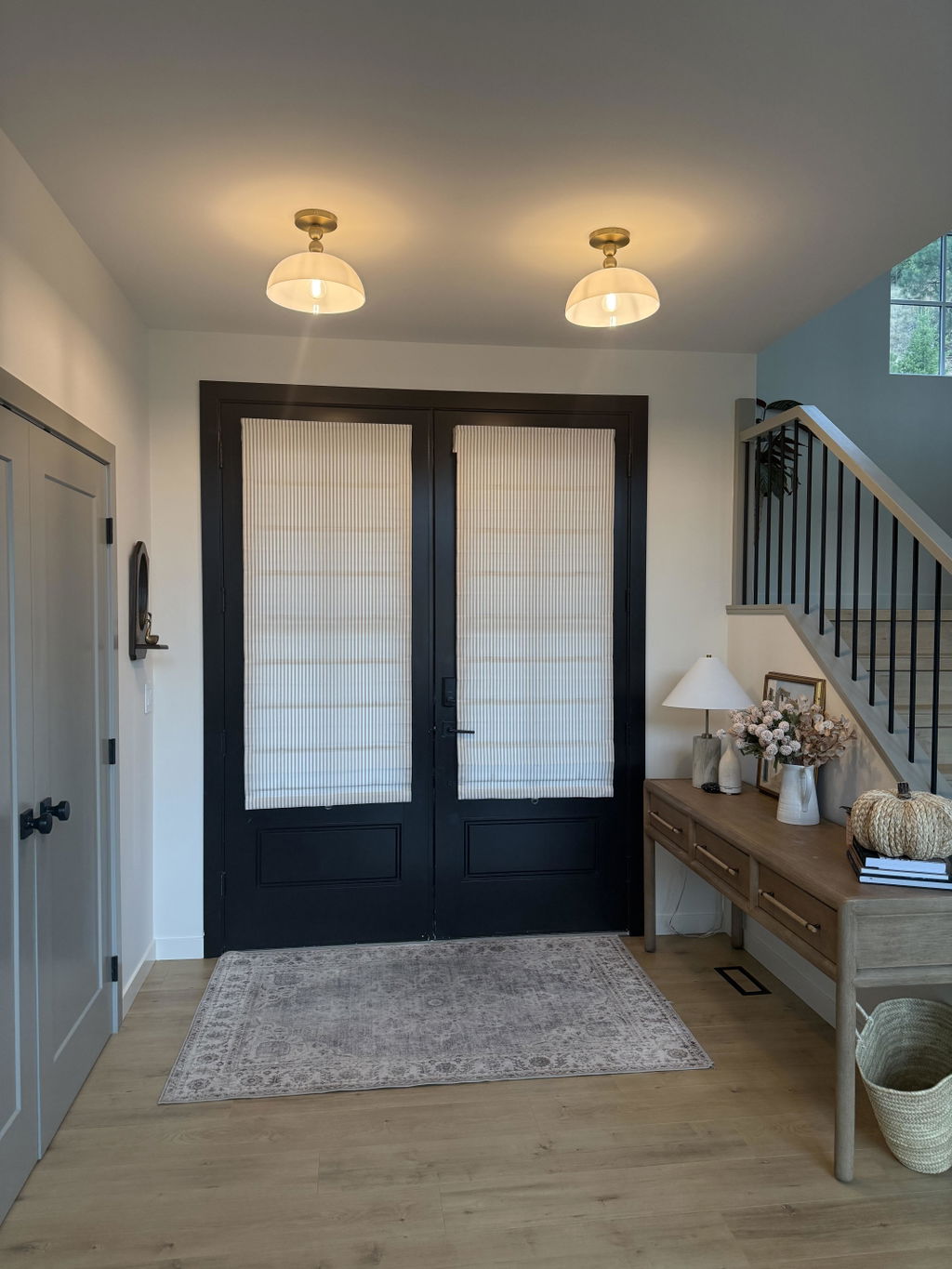
Cr: @peridotandpeonies
Room Pairings
The Roman shades vs. bamboo shades decision often comes down to the room. Here's a quick reference for where each one tends to work best.
|
Room |
Best Choice |
Why |
|
Living room |
Either |
Bamboo adds organic texture for a relaxed space; Roman offers a more tailored, polished look |
|
Bedroom |
Roman, with blackout liner |
Precise light and privacy control for sleep |
|
Kitchen |
Roman (moisture-resistant fabric) for heavy-use areas; bamboo if well-ventilated and away from the stove |
Balances easy cleanup with humidity resistance |
|
Home office |
Roman |
Clean lines, adjustable light control |
|
Bathroom |
Roman, polyester or blend fabric |
Best moisture resistance |
|
Sunroom or reading nook |
Bamboo |
Natural light diffusion suits the space |
|
Nursery |
Roman, with blackout liner |
Safety plus full light block for naptime |
|
Coastal or boho space |
Bamboo |
Natural texture fits the aesthetic |
|
Traditional or formal space |
Roman |
Fabric and fold styles suit classic interiors |

What About Bamboo Roman Shades?
The Roman shades vs. bamboo shades comparison doesn't have to be either/or. A bamboo Roman shade combines the woven texture of bamboo with the structured, stacked-pleat mechanism of a Roman shade, so it lifts into clean, evenly stacked folds instead of rolling up. It's a good option if you want organic texture without a casual, roll-up look, or if you'd rather have one polished treatment than layer bamboo under curtains.

Pictured: Liz Linen Roman Shade Cordless - Burlywood Birch 1908-5. cr: @my.bell.house
Bamboo or Roman Shades: Which to Choose
Still weighing Roman shades vs. bamboo blinds? Use these quick checklists to match the shade to your priorities. For sizing tips, see our Window Shade Sizes Guide.
Choose bamboo shades if:
-
You love organic texture and natural, earthy tones
-
Your style leans coastal, boho, or farmhouse
-
Sustainability is a top priority
-
You enjoy the effect of soft, filtered light
-
You plan to layer curtain panels over the shade for added depth and privacy
Choose Roman shades if:
-
You want maximum flexibility in light control and privacy
-
You need real thermal insulation for a drafty or sun-heavy window
-
Your space is formal, modern, or transitional
-
You want access to a wide range of fabric, color, and fold options
-
You'd rather have one shade that does everything well
Choose bamboo Roman shades if:
-
You want bamboo's texture and sustainability with a more tailored, structured fold
-
You want a single, polished treatment without layering curtains on top
Still Choosing Bamboo or Roman Shades?
Sometimes, the fastest way to navigate Roman Shades vs. Bamboo Shades is to talk it through with someone who works with both materials every day. TWOPAGES offers a free design consultation with a professional interior designer, who can review your space and recommend the right fit for your window.
FAQs
Which controls light better, Roman or bamboo?
Roman, especially day/night and zebra styles, which use two fabric layers you can shift to fine-tune light level throughout the day rather than just switching between a few fixed settings. Standard Roman shades still cover a wide range with the right liner. Bamboo filters light beautifully on its own but has a narrower range without one.
Which is more budget-friendly, Roman or bamboo shades?
It varies by fabric and size, but unlined bamboo and simpler Roman styles are usually the most affordable picks in either line.
What are the Roman shade fold styles?
TWOPAGES's Roman shade collection spans 14 fold styles: flat fold, plain, front slat, back slat, top down bottom up, soft fold, relaxed, tulip, day/night, day/night with valance, fan shaped, zebra, ruffled, and flat. The three foundational constructions are flat fold (a smooth panel with no visible pleats), soft fold (continuous pleats for a classic texture), and relaxed (gentle curves for an airy, casual look); the rest build on these with their own structural or functional twist.
Are Roman shades machine washable?
Check the care label first, since not every Roman shade can go in the machine regardless of fabric. If yours can, remove the hardware, wash on a gentle cold cycle, and lay flat to dry. For anything delicate or heavily lined, professional dry cleaning is the safer bet. See our full cleaning guide for the complete routine.


Leave a comment