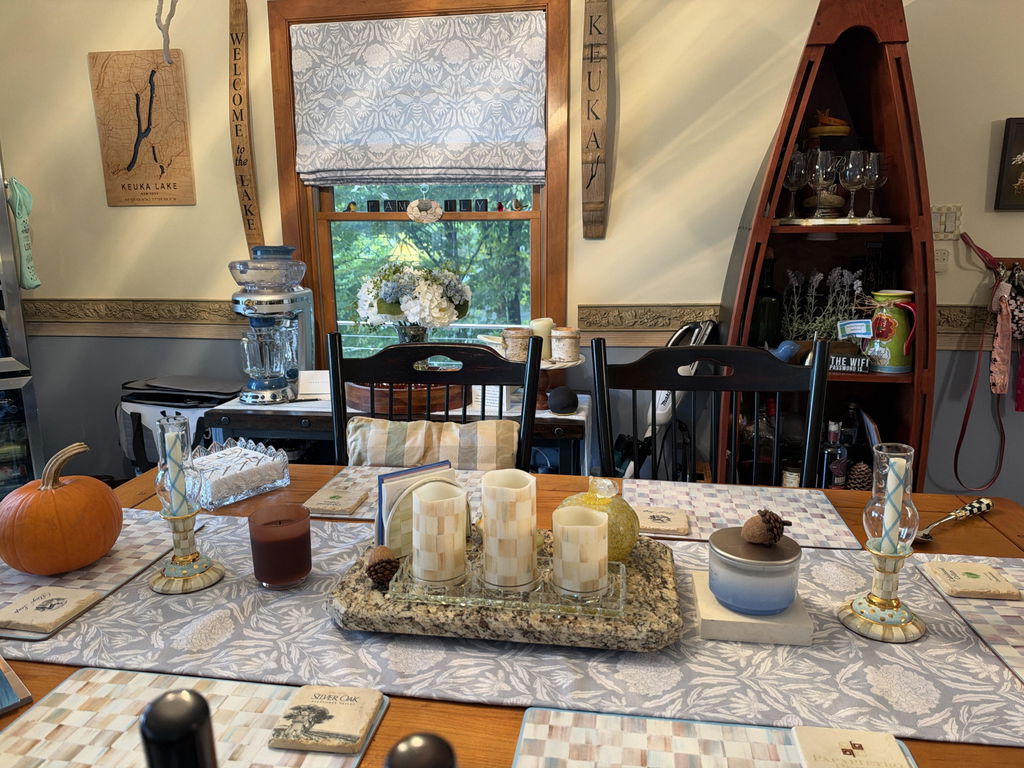
Britt Bengoechea x TWOPAGES Modern Patterned Table Runner


Britt Bengoechea x TWOPAGES Modern Patterned Table Runner
- Customizable
- Designer Style
- Artistic Prints


Checkout securely with


Description
Order Fabric Booklets
CARE
Shipping & Return

Britt Bengoechea
Founder of Reunion Interiors, Britt is known for her abilityto create spaces that feel both timeless and personal.
Raised in a family rooted in custom building and design,Britt now works alongside her Spanish husband-a skilledcarpenter, seamlessly blending craftsmanship with layeredstorytelling.
Her design philosophy? A well-decorated home tells a story:it honours the past, embraces the present, and feelscollected over time. This collaboration reflects thatethos-natural, warm, and full of history
FAQs
How do I choose the perfect table runner size for my table?
Measure the length of your table first, then decide whether you want the runner to hang over the ends or sit within the tabletop edges. For a classic dining table runner look, allow about 6–12 inches of drop on each end. For a modern casual look, choose a shorter runner that stays inside the table edges.
What standard table runner sizes do you offer, and can I order a custom size?
We offer 5 versatile table runner sizes designed for dining tables, coffee tables, consoles, sideboards, and kitchen islands:
14” × 51” | 14” × 72” | 14” × 90” | 18” × 90” | 18” × 108”
If you need a table runner for an extra-long dining table, oversized kitchen island, narrow console, coffee table, or unique surface, please contact our customer service team with your preferred dimensions for custom sizing.
Can I use a table runner with placemats or a tablecloth?
Yes. Many customers layer a table runner with placemats for everyday dining or place it over a tablecloth for a more formal setting. This layered look works especially well for holidays, dinner parties, Thanksgiving, Christmas, spring brunches, and family gatherings.
How do I remove wrinkles from shipping or folding?
For most cotton, linen-blend, or polyester-blend table runners, iron on the reverse side with low-to-medium heat. For printed or velvet table runners, avoid ironing directly on the printed or velvet face; gently steam the reverse side to help release creases.
Neutral Theme
Less is more. In the context of interior design, neutral means without color. Neutrals such as beige, ivory, taupe, black, gray, and shades of white appear to be without color. but in many applications these hues often have undertones. Be aware of these underlying tones as you match colors. Neutral colors are muted shades that appear to lack color but often have underlying hues that change with different lighting. To some extent, blacks, browns, tans, golds, and beige are considered warm. Cooler colors, on the other hand, are white, ivory, silver, and gray.